
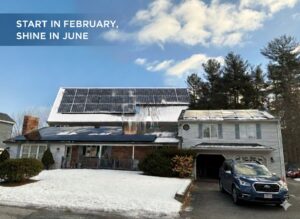
 While many Massachusetts homeowners think solar installers head south for the winter, the reality is quite the opposite. At Brightstar Solar, our busiest season for planning starts right now. If your goal is to slash those massive July and August electric bills, the work begins while there’s still snow on the ground.
Here is why the “Start in February, Shine in June” strategy is the smartest move for your home and your wallet in 2026.
Winter Solar Planning in Massachusetts: The 2026 Strategy for Summer Savings
It’s a common misconception that solar is a weekend DIY project. In Massachusetts, the “Solar To-Do List” involves several steps that are largely out of an installer’s hands:
-
Design & Engineering: Ensuring your roof structure is 2026-code compliant. Every project undergoes a structural analysis by a Massachusetts Professional Engineer.
-
Permitting: Navigating local town building departments (which can take 2–6 weeks).
-
Utility Interconnection: National Grid, Eversource, and Unitil have rigorous approval processes to ensure the grid can handle your power.
-
Incentive Application: Locking in your spot in the MA SMART 3.0 Program and state rebates.
If you wait until the first warm day in April to call us, you likely won’t be “plugged into the sun” until July, or maybe even September. By starting in February, we handle the paperwork while it’s cold, so we can install the moment the roof is clear.
How We Conduct Evaluations in the Snow
You might wonder: “How can you measure my Tewksbury home’s roof if it’s covered in 12 inches of snow?”
While some national companies rely solely on outdated satellite imagery—which can misjudge roof size by up to 20%—we prefer a boots-on-the-ground approach.
-
The Gutter-Line Analysis: While we won’t walk on a pitch-covered in ice (safety first!), we use specialized tools from the gutter line to measure shading and orientation.
-
Conservative Estimates: We calculate your production based on “worst-case” shading scenarios. If the numbers look good in the dead of winter, they’ll look even better in the summer.
-
The “Safety First” Policy: We examine your electrical panel and attic structure from the inside, where it’s warm, ensuring your home is structurally and electrically ready for solar.
Beat the 2026 Spring Rush
As electricity rates continue to fluctuate, the demand for residential solar in Massachusetts remains high. Many installers find themselves booked months out by the time May rolls around.
By scheduling your evaluation in February:
-
You lock in discounted winter pricing.
-
You move to the front of the installation queue.
-
You capture the peak sun hours: June and July are the highest production months of the year. Don’t spend them waiting for a permit!
Ready to get started?
Don’t let the Massachusetts winter stall your savings. Brightstar Solar is a licensed solar panel installer dedicated to navigating the red tape so you don’t have to.
Contact us today for a free winter solar evaluation and make sure your home is ready to shine by June.