
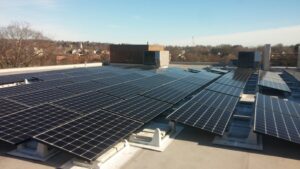
 For over 16 years, we’ve been a fixture in the Massachusetts solar industry. We’ve seen it all – from heavy snow loads in Worcester County to strict historic district requirements in Andover and Concord. Since 2009, our crew has designed and installed over 700 systems across Middlesex, Worcester, Essex, Norfolk, Bristol, and Plymouth counties. For nearly two decades, we’ve been focused on residential solar needs while only doing a handful of commercials projects every year. But as of January 1, 2026, the landscape has shifted. While the federal residential tax credit has officially expired, businesses still have a short window to monetize federal solar incentives. If you own a business in the Bay State, your roof is currently your most underutilized financial asset. Here is why 2026 is the “Golden Year” for commercial solar in Massachusetts.
- The Residential “Sunset” vs. The Commercial “Golden Window”
The expiration of the residential credit has led to a common misconception that all solar incentives are gone. This is far from true for businesses.
Under the One Big Beautiful Bill Act (OBBBA) signed last July, the Section 48E Commercial Investment Tax Credit (ITC) remains at a robust 30%. However, the law introduced a “cliff” that every Massachusetts business owner needs to know:
- The July 4, 2026 Deadline: To guarantee the full 30% credit and secure a 4-year window to finish your project, you must “Begin Construction” by July 4, 2026.
- The 2028 Cliff: Under current law, the commercial credit is scheduled for total elimination starting in 2028.
- Beyond the 30%: Massachusetts-Specific Incentives
The federal credit is just the first layer. Massachusetts remains one of the most pro-solar states for businesses thanks to:
- SMART 3.0 Program: You receive monthly incentive payments for every kilowatt-hour your system produces for 20 years.
- 100% Bonus Depreciation: This allows you to write off a massive portion of the system cost in the very first year, significantly boosting your 2026 cash flow.
- Turning an Operating Expense into a Fixed Asset
For most small businesses in Worcester or Middlesex County, electricity is a volatile, rising expense. By transitioning to solar, you are essentially “pre-purchasing” 25 years of electricity at a fixed, dramatically lower rate.
At a time when utility rates are unpredictable, solar provides the one thing every CFO wants: certainty.
- Why 700+ Projects Matter
We have experience coordinating with local utilities, Eversource and National Grid, familiarity with evolving Massachusetts building and electrical codes, and understand the nuances of the Massachusetts-specific incentive programs such as SMART 3.0.
We aren’t a national “fly-by-night” installer. We’ve been here since 2009, survived every incentive and policy shift, and built a reputation for systems that actually perform and hold up to New England weather. We are now bringing that 17-year track record to help local businesses protect their bottom lines.
To meet the OBBBA ‘Begin Construction’ requirement by July 4th, we don’t just sign a paper. We focus on getting your initial site prep and physical work started in June to ensure your 4-year safe-harbor window is locked in. Our team is already scheduling these ‘pre-deadline’ starts for Q2 of this year.”
Don’t Miss the July 4th Deadline
The transition from residential to commercial isn’t just a new chapter for us—it’s the best financial move available for your business right now.
Is your roof ready to start paying you back? Contact us to see exactly how much your business can save before the 30% credit begins its sunset.