
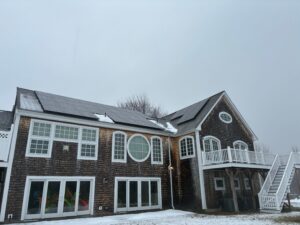
 Yesterday’s Nor’easter left a blanket across the the Bay State, with 22 inches in Hopkinton, 18 inches in Sharon, 16 inches in Waltham, and 11 inches in Worcester. For many Massachusetts commercial solar owners and home solar customers, seeing your array buried under nearly two feet of snow can be stressful or frustrating.
Here is my updated guide on how to safely handle snow on your solar panels:
If you’ve invested in solar, you naturally want it producing power year-round. In New England, snow is the biggest impediment to winter production. But, before you grab a ladder, you need to balance the financial gain of clearing the panels against the physical risk to yourself and your equipment.
1. The “Wait It Out” Method (The Gold Standard)
Most solar panels are made of high-durability, anti-reflective glass that is incredibly slippery.
-
The Physics: Even in a storm like yesterday’s, once a small corner of a dark panel is exposed to the sun, it begins to generate heat.
-
The Result: This creates a microscopic layer of water between the snow and the glass. Because your roof is pitched, gravity usually wins within 24 to 48 hours.
-
2026 Update: If your system uses microinverters or DC optimizers, individual panels can “wake up” and start melting their own snow even if the rest of the array is still buried.
2. Use a Specialized Solar Snow Rake
If you just can’t wait for a “natural shed,” do not use a standard metal roof rake. A metal rake will scratch the glass, create micro-cracks, and likely void your manufacturer’s warranty.
Instead, look for a telescoping tool designed specifically for solar panels. The True Temper Telescoping Roof Rake features a lightweight aluminum handle that can reach up to 17 feet, allowing you to work safely from the ground. For even more protection, the Extra Soft Snow Pro uses a non-abrasive foam head that won’t scratch the anti-reflective coating on your panels.
3. What to Avoid (The “Do Not” List)
-
Hosing it down: It sounds easy, but spraying water on panels in sub-freezing Sharon or Worcester temperatures is a recipe for disaster. You will likely turn a layer of fluffy snow into a thick sheet of heavy ice.
-
Chemicals & De-icers: Never use rock salt, car wax, or RainX. These can damage the aluminum frames, stain your siding, and degrade the seals that keep your panels weather-tight.
-
Hot Water: The thermal shock of hot water hitting cold glass can cause the tempered glass to shatter instantly.
4. Safety First: Watch for “Roof Avalanches”
When 22 inches of snow slides off a slippery solar array, it doesn’t fall slowly—it releases all at once. This is known as a roof avalanche. Always stand to the side of your array, never directly beneath it, and keep pets and children clear of the “drop zone” during a thaw.
Is it Worth the Effort?
In the grand scheme of a 25-year investment, a few days of zero production after a storm won’t break your ROI. However, for those who want to be proactive, using a soft-head rake from the ground is the only safe way to go.
If you’re considering commercial solar in Massachusetts or solar panels for your home, Brightstar Solar is here to help. Based in Marlborough, we’ve spent 17 years helping our businesses and homeowners navigate New England winters. Brightstar Solar offers a complimentary solar evaluation and free estimate and we would be happy to answer any questions you have about solar panels and their associated maintenance.