
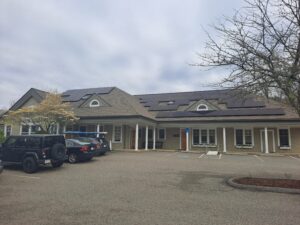
 In the last year, the Massachusetts solar landscape has shifted. We’ve seen national names pull out of the state and local “start-ups” quietly close their doors. For a business owner, this creates a nightmare scenario: The Solar Orphan. You have a significant investment on your roof, but when a monitoring alert goes off or a storm causes an issue, the number you call is disconnected. At Brightstar Solar, we’ve seen this story play out since 2009. While others have come and gone, Mona and Jon Reese have remained at the helm right here in Marlborough, ensuring that our 700+ clients are never left stranded.
- The Danger of the “Abandoned” System
Most solar companies refuse to service systems they didn’t build. It’s a liability they don’t want. This leaves businesses in Worcester or Middlesex County in a lurch.
- The Reality: If your installer is gone, your labor warranty is likely void.
- Our Difference: We are a mainstay. Our crew isn’t a rotating group of subcontractors; they are long-standing employees who have been with us for years. When we build a system for a dental office in Sudbury or a library in Walpole, we do it with the intention of servicing it for the next 25 years.
- Immediate Urgency: The 2026 “Tax Cliff”
Choosing a stable partner isn’t just about future repairs—it’s about securing your money today. Small and medium-sized businesses in MA currently have a massive opportunity to leverage the Federal Investment Tax Credit (ITC) for a 30% dollar-for-dollar tax credit on eligible system costs.
But the window is closing fast. Under the rules of the One Big Beautiful Bill Act (OBBBA), the clock is ticking on two critical dates:
- July 4, 2026: Your project must “Begin Construction” by this date to lock in the full 30% benefit.
- December 31, 2027: If you miss the July 4th start, the system must be fully “Placed in Service” by year-end 2027, or the credit is gone.
If you sign with a company that struggles with permitting or closes up shop mid-way, you don’t just lose a contractor—you lose a 30% tax shield that directly reduces your federal tax liability.
- Navigating the “Tough” Jurisdictions
Commercial solar in Massachusetts isn’t “plug and play.” Whether it’s the strict regulations in Essex County or the complex utility interconnections with National Grid, Eversource, and Unitil, experience is the only thing that prevents project delays that could cost you your tax credit.
- Proven Track Record: We’ve successfully navigated the permit hurdles for Kirk Dental in Sudbury and Dental Associates in Marlborough.
- Low-Pressure, High-Expertise: We don’t use “closers.” Jon and Mona manage the process from design to construction. We let the savings and our 13 consecutive years as a Top Solar Contractor do the talking.
- Maximizing the MA Advantage: SMART 3.0 & 100% Bonus Depreciation
We help local businesses stack the 30% ITC with other unique 2026 benefits:
- 100% Bonus Depreciation: Write off the entire system cost in Year 1 to maximize cash flow.
- SMART 3.0: Earn monthly incentive checks for every kilowatt-hour you generate.
- Local Financing: We know the unique financing opportunities available specifically to Central and Eastern MA business owners.
Don’t Get Stranded.
Solar is a 25-year relationship. If you are a business owner in Middlesex, Worcester, Norfolk, Essex, Bristol, or Plymouth County, you need a partner who will be here to answer the phone in 2030 and 2040.
[Click here to request a Low-Pressure Commercial Solar Evaluation] and see why 13 years as a Solar Power World “Top Solar Contractor” isn’t just a trophy—it’s a promise that your investment (and your tax credit) is in safe hands.